A Drop in the Ocean Is Never Sean Again
Article
Marine Animals on the Motility
"Even if you never have the chance to see or touch the bounding main, the ocean touches you with every jiff you take, every drop of water you lot potable, every bite y'all consume.
Everyone, everywhere is inextricably connected to and utterly dependent upon the being of the sea."
-Sylvia Earle

NASA Earth Observatory images by Lauren Dauphin, and sea surface temperature information from Coral Reef Watch.
You may be familiar with estrus waves on land, but in a changing, warming world, estrus waves are starting to become common in the body of water, too. The normally absurd Gulf of Maine, which surrounds Acadia National Park, has seen several heat waves in recent years and has spent well-nigh of the last 2 centuries with unusually warm water temperatures. Since 2004, the ocean h2o temperature has risen approximately 2-3 degrees Fahrenheit. On the surface, this may seem similar a pocket-size difference, but information technology has large implications. This increment means the Gulf of Maine is warming 99% faster than the rest of the globe'due south oceans.
The Gulf of Maine Research Heart believes temperatures in the Gulf of Maine are climbing for 2 main reasons:
- Rise air temperatures and greenhouse gas concentrations are causing warming of the oceans worldwide.
- Ice melt in Greenland is pumping fresh h2o out of the arctic, which is changing normal ocean currents in the region.
These changes are bringing warmer currents into the expanse and, in turn, are irresolute what animals we're seeing inhabit the body of water waters effectually Acadia National Park. Every bit sea water temperatures warm, the distribution of many marine species—including those we rely on for food—will shift due to their dependence on specific h2o temperatures. Warmer h2o temperatures too deplete vital nutrients and decrease the oxygen content in the water which tin can also cause species to migrate elsewhere to feed. One time those species shift, the predators that rely on them for nutrient must adapt or follow.
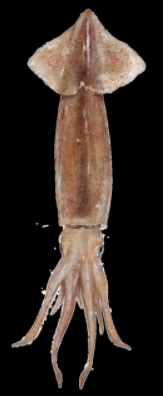
Photo Credit: NOAA
New Species Sally
Environmental changes take already forced marine creatures, normally found further south, to movement into the Gulf of Maine such as:
- Longfin Squid (Doryteuthis (Amerigo) pealeii)
- Blackness Sea Bass (Centropristis striata)
- Body of water Horses (Hippocampus erectus)
- Butterfish (Peprilus triacanthus)
- Bounding main Sunfish (Mola mola)
- Green Crab (Carcinus maenas)
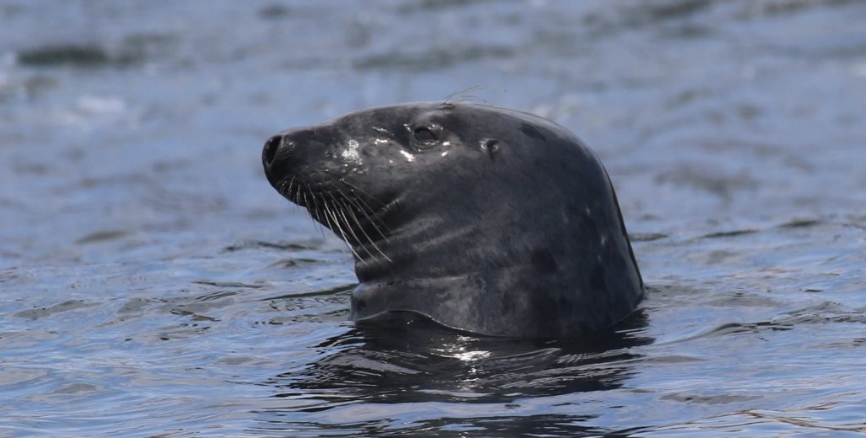
Photo Credit: Schoodic Establish
Gray Seals, which have historically inhabited Frenchman Bay, take increased in number here equally their range continues to shift northward. Ironically, the warmer water initially created platonic conditions for lobsters. This contributed to an overabundance in Maine in contempo years, causing prices to tumble to their everyman point in nearly ii decades. Continued warming may be forcing the lobsters to move even further north toward Nova Scotia. These changes are too harming some of Maine's other nigh economically and culturally significant fisheries including shrimp, oysters, scallops, and cod.

Photo credit: USFWS
New species moving in pose problems for native animals that aren't adapted to these newcomers. Atlantic Puffins usually feast on herring and hake, which have started moving northward, leaving puffins to forage for the larger butterfish to feed their chicks. However, butterfish are often too wide for the chicks to eat, which creates challenges for the puffin colonies. Puffin chicks have starved and died because of a lack of the herring and hake they demand to grow and fledge successfully. Although puffins are not commonly found in or along Acadia'due south boundaries, the implications of changing ecoystems in the Gulf of Maine and surrounding waters is extremely relevant to the survial of species beyond the greater littoral Maine ecosystem.

Photo Credit: NOAA
Not all marine species will continue to reply to irresolute temperatures and nutrient availability at the same time, which can and volition disrupt the food web. Many marine creatures time their reproductive and migratory cycles around prey, such as whales migrating through the Gulf of Maine to the Chill to feed on krill in the summertime and salmon migrating to the oceans for seasonal nutrients. When these patterns are disrupted due to a irresolute climate, they tin can besides alter predator-prey relationships, increment starvation in many species, and result in poor reproductive success.
This is not only an Acadia National Park issue. Over eighty National Park sites are coastal, so it's likely you have been to other sites that volition exist facing these same issues due to climate change. If left to current devices, these changes will continue to affect our treasured ocean ecosystems and every co-operative of the food web. Learn more than about the changes that Acadia and other national parks are going through and what you lot can practice to assistance .
Concluding updated: August 14, 2021
Source: https://www.nps.gov/articles/marine-animals-on-the-move.htm
0 Response to "A Drop in the Ocean Is Never Sean Again"
Post a Comment